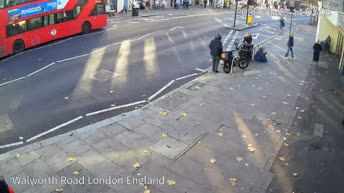
This article provides an in-depth guide regarding the search query , focusing on cybersecurity, the risks of exposed security cameras, and how to protect your own devices.
Many camera interfaces display GPS coordinates or business names, making it easy to tie a digital feed to a physical address. 💡 How to Secure Your Own Camera
This phenomenon also raises profound ethical questions for the "viewer." There is a distinct psychological shift that occurs when a person sits behind a screen and accesses a live feed of a stranger’s life. It feels like a victimless exploration—a digital "urban exploration"—yet it is a fundamental breach of the social contract. Privacy is not merely the absence of people; it is the expectation of control over who sees us. When we stumble upon these feeds, we are participating in a global, decentralized Panopticon where the guards are anyone with a search engine.
For a more comprehensive understanding, similar "dorks" are often used to find public webcams:
Combine the "dork" with a city name, such as inurl:"ViewerFrame?Mode=Motion" Moscow . Alternative Parameters: intitle:"Live View / - AXIS" inurl:view/indexFrame.shtml Axis Important Considerations
I type the command again.
: Automated scripts use these strings to find devices with default credentials (like "admin/admin") to exploit them. If you are trying to secure your own camera , make sure to change the default password
People use these commands to locate unsecured live video feeds across the globe. This string targets older network cameras—primarily manufactured by Panasonic—that remain connected to the internet without password protection. How Google Dorks Expose Private Feeds
UPnP is a convenience feature that often creates more holes than it fills. Log into your router’s administration panel (usually 192.168.1.1 or 192.168.0.1 ) and turn off UPnP. Then manually set up port forwarding only if absolutely necessary.
A specific URL path used by older network cameras, primarily manufactured by Panasonic.
When combined, this search string is designed to find web-based camera viewers that are —specifically, those that do not require a login or have been indexed by Google’s bots despite being meant for private internal use.
This is a Google search operator. It tells the search engine to only return results where the following text appears inside the actual URL (Uniform Resource Locator) of a webpage.
The parameter ?mode=motion tells the camera or DVR to display only video frames where motion has been detected. In many implementations, this page is designed for internal network use but is mistakenly left accessible from the public internet. When Google indexes it, anyone with the link can see a live or near‑live view of whatever the camera is pointing at—often without any authentication.
Once an attacker locates a camera via a Google dork, they can often access the full administrative panel. If the device still uses factory-default login credentials (such as admin/admin), the attacker can alter settings, join the device to a botnet, or use it as a pivot point to infiltrate the broader local network. Remediation and Protection Strategies
Here’s a clean, professional, and effective write-up you can use, depending on your context (e.g., a security report, an educational post, or an OSINT investigation log).
This operator tells Google to search for specific text within the URL of a website.