
Get to the root of your digestive issues with gut-brain therapy techniques that help you self-manage your gut symptoms in just 6-weeks.

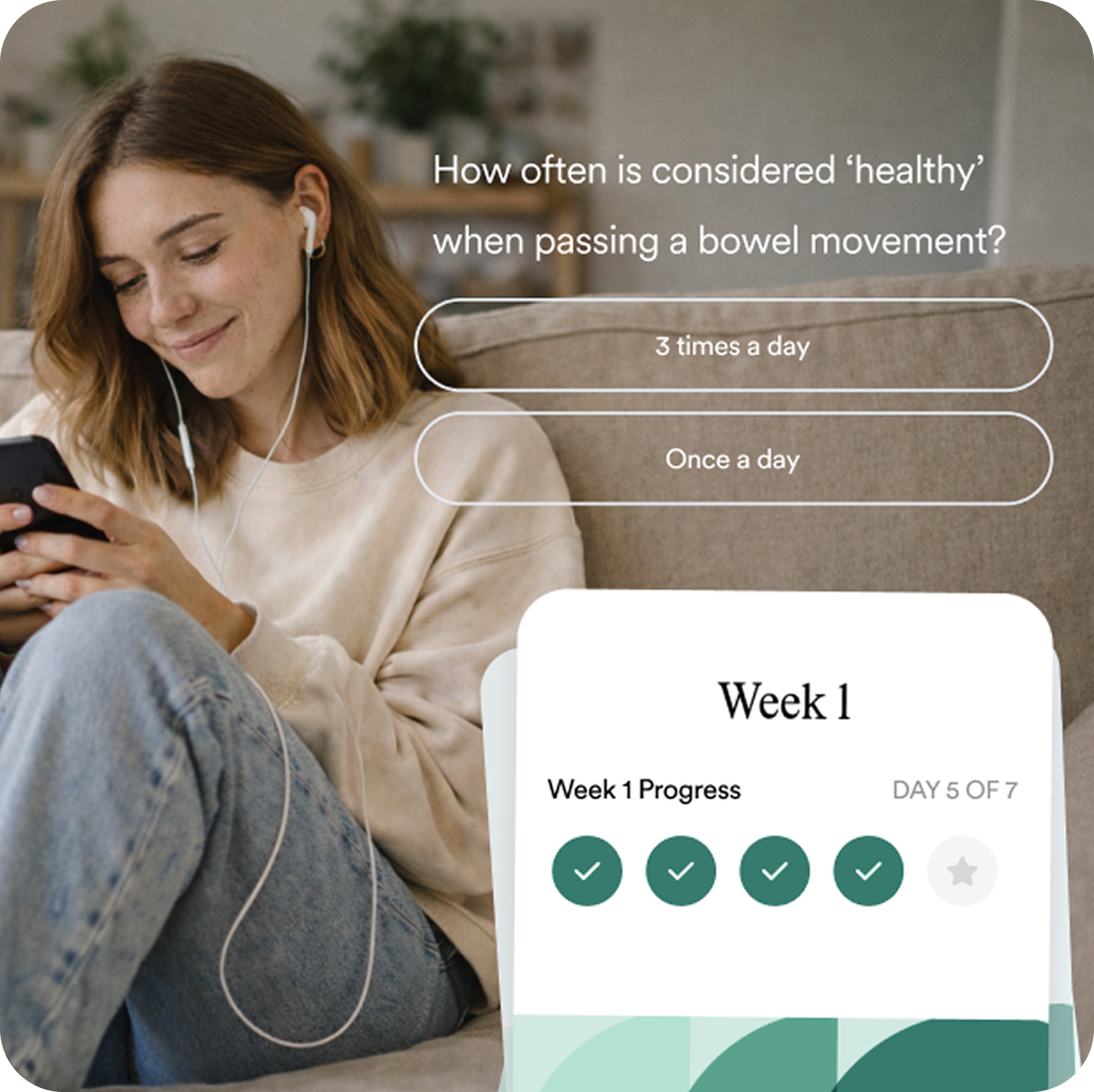


IBS, functional dyspepsia, functional constipation, and functional heartburn are now classified as gut-brain disorders - conditions driven by miscommunication between the gut and brain. The same gut-brain dysfunction also explains why many people with IBD continue to experience pain, constipation, or diarrhea even when their disease is in remission.
When the gut and brain fail to communicate properly, the body can misinterpret normal digestive processes as pain or discomfort. This heightened sensitivity, known as visceral hypersensitivity, can make the gut more reactive and contribute to gastrointestinal symptoms.


Nerva combines evidence-based gut-brain therapy techniques with real human support to help you self-manage symptoms, rebuild confidence, and get back to living fully.

The Nerva program was co-founded by Dr. Simone Peters, who ran a clinical trial with Monash University that found gut-brain therapy therapy worked just as well as the Low FODMAP diet in helping you participants well with and self-manage IBS.


Gut-brain therapy techniques targets the source of the problem: oversensitive nerves in the gut.

Gut-brain therapy techniques teaches you how to address this miscommunication between the gut and brain.

Gut-brain therapy techniques has been shown to help with constipation, diarrhea and mixed IBS.

Studies have shown gut-brain therapy techniques can help you achieve long-lasting IBS management.




Answer questions about you and your gut history to see if Nerva can work for you.

Daily gut-brain sessions, educational content, and goal oriented progress, tailored to your preferences.

Learn skills that can help you teach your brain to ignore false alarms from the gut triggered by food and stress.

Live the life you want, free from the control of digestive diseases.
.png)

Backed by 5+ studies including a randomized controlled trial.

9/10 members see meaningful progress in 4-6 weeks.

Learn skills focused on retraining the gut-brain axis.

Short daily sessions from the comfort of your home.

Action Verb+Context/Scope+Quantifiable Metric=Maximum ImpactAction Verb plus Context/Scope plus Quantifiable Metric equals Maximum Impact
The Ultimate Guide to Extracurricular Activities: Lessons from the Richard Guide
These activities demonstrate exceptional achievement beyond your local region.
In today’s competitive academic landscape, the term "extracurricular activities" often brings to mind a packed schedule of sports, music lessons, and volunteering designed solely to impress college admissions officers. However, the true value of extracurriculars extends far beyond a résumé line. They are essential arenas for self-discovery, leadership development, and personal growth.
Most students treat extracurriculars as a checklist. This is a mistake. This guide—rooted in direct, logical principles—argues that activities should serve only three purposes: If an activity does not fit one of these three, drop it immediately. extracurricular activities richard guide
Unless you are recruited, your varsity letter is just a checkbox. However, starting an intramural league or coaching a youth team builds leadership. The athlete who becomes a referee is more interesting than the benchwarmer.
"I’ve valued my time with [Club Name], but I need to focus on [academic or higher-priority activity]. I will help transition my responsibilities by [date two weeks out]. Thank you for the opportunity."
Hmm, the user didn't specify a niche, but "extracurricular activities" is broad—could be for high school students, college applications, or personal development. I'll assume the primary audience is students (and parents) navigating the competitive landscape of college admissions, as that's a common high-intent search. The name "Richard" gives a slightly authoritative, classic feel, so I'll craft a guide that's strategic, data-driven, and practical, not just a list of clubs.
An extracurricular activity is anything you do outside of class that does not have a required grade, consumes significant time, and produces a measurable outcome. this framework focuses on deep impact
A capstone project is a self-directed initiative that serves as the crown jewel of your application. Do not wait for opportunities to be handed to you; create them.
Every helicopter parent demands “well-rounded.” I, Richard, demand the opposite.
5. Extracurriculars and College Admissions: What Are They Looking For?
Now go build your resume. Your future self (and your admissions officer) will thank you. log a few volunteer hours
Never use passive phrases like "Responsible for organizing meetings." Use the Action-Result Formula instead:
This is where unique applicants shine. Self-publishing a poetry collection, performing original music at a local venue, or directing a student film takes massive initiative. Band class is schoolwork. Your garage band that sold out a coffee shop is an extracurricular.
Many students make the mistake of collecting activities like trading cards. They join ten different clubs, log a few volunteer hours, and hope the sheer volume impresses admissions committees. This approach often backfires, signaling a lack of focus.
The approach to extracurricular activities flips the traditional "resume-padding" mindset on its head. Instead of collecting random club memberships, this framework focuses on deep impact, authentic passion, and scalable achievements. The Core Philosophy of the Richard Guide

"Hi, it's Alex, one of the founders of Nerva alongside Chris and Dr. Simone Peters.
We designed Nerva to help people with gut-brain disorders get back to a happy, normal life, free of flare-up worries. We're so proud of the fact that we've already helped over 300,000 people live better. Yet, we understand Nerva may not work for some people which is why we have a 100% money back guarantee.
If you finish your 6-week program and think Nerva hasn't helped you manage your symptoms, simply email support for a full refund of the Nerva program."
- Alex Naoumidis, Co-Founder and Co-CEO, Mindset Health


Based on studies that helped 3 in 4 people manage their gut symptoms.

15 minutes a day for 6 weeks. Short and relaxing sessions that fit with your schedule.

Discover helpful and calming flare-up exercises, like our deep breathing techniques.

Listen anytime and anywhere (home, office, couch, you name it).

Learn about gut-brain disorders with a range of easy to understand in-app articles.

Say bye to bots. We have real Nerva team members ready to help!
.svg)
.svg)


1) Anderson, Ellen J. BNutSci, MDiet1,2; Peters, Simone L. BSc (Psychophysiology) (Hons), PhD1; Gibson, Peter R. MBBS(Hons), MD1,2; Halmos, Emma P. BNutDiet, PGradDipBSc, PhD1,2. Comparison of Digitally Delivered Gut-Directed Hypnotherapy Program With an Active Control for Irritable Bowel Syndrome. The American Journal of Gastroenterology 120(2):p 440-448, February 2025. | DOI: 10.14309/ajg.0000000000002921 2) Peters, S. L., Yao, C. K., Philpott, H., Yelland, G. W., Muir, J. G., & Gibson, P. R. (2016). Randomised clinical trial: the efficacy of gut-directed hypnotherapy is similar to that of the low FODMAP diet for the treatment of irritable bowel syndrome. Alimentary pharmacology & therapeutics, 44(5), 447–459. https://doi.org/10.1111/apt.13706


